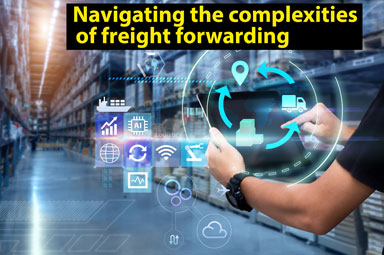
Business Logistics technology concept graphic with a view down the aisle of a freight warehouse with text that reads Navigating the complexities of freight forwarding.

Guidelines to help you navigate the complexities of freight forwarding 


Introduction:

Freight forwarding is a critical component of all international trade. Forwarders ensure that goods move across international borders.

Yet, even experienced experts can easily make several common mistakes that may be costly or even knock your operations off track.

This guide will help you identify these types of errors and avoid them.


Understanding Freight Forwarding


What is Freight Forwarding?

Freight forwarding is the service that companies provide for individuals or corporations to transport goods shipments from manufacturers or producers to markets, customers, or final distribution. It comprises services such as:

  • Inland transportation monitoring
  • Preparation of shipping and export documents
  • Warehousing
  • Cargo space booking
  • Negotiation of freight charges
  • Freight consolidation
  • Insurance for cargo
  • Filing insurance claims


Common Errors in Freight Forwarding


Insufficient Documentation

One of the biggest common errors in freight forwarding is improper or incomplete documentation. Missing paperwork and inaccurately prepared documentation result in great delays and unnecessary expenses.

Ensure that all required documents, such as bills of lading, commercial invoices, certificates of origin, etc., are duly filled in and submitted within the stipulated time frame.

Poor Communication

Effective communication is a critical aspect of working with a freight forwarder. If there is any misunderstanding or incapability to update, your whole supply chain process may be jeopardized.

Make sure that your forwarder establishes proper lines of communication with all parties involved, such as shippers, carriers, and you, so that everybody is on the same page.

Inaccurate Harmonized System (HS) Codes

HS codes classify products for customs. Incorrect codes can cause delays and additional costs. Verify HS codes with a customs expert or use online resources.

Ignoring Customs Regulations

Every country has its own customs, regulations, and requirements. If not complied with, these could lead to penalties or confiscation of goods, among other things.

Your forwarder should be up to date with the most current customs rules. When in doubt, use experienced customs brokers.

Overlooking Insurance

As tempting as it is to avoid insurance altogether, this could prove very expensive.

Accidents, theft, and damage can occur while the goods are in transit. All-inclusive cargo insurance ensures the protection of your shipment and offers peace of mind.

Poor Packaging

This will result in damaged goods and higher costs.

Ensure that all the items are packaged according to the nature of the goods and that such packaging is carried out correctly, following the requirements of the particular shipping mode. Use quality materials and, where needed, consider professional packing services.


Effective Freight Forwarding Best Practices


Choose the Right Forwarder

Choosing a good and experienced freight forwarder can make all the difference. Look for a company with a proven track record, an extensive network, and positive customer reviews.

A reliable forwarder will manage all the complexities in logistics, leaving you to concentrate solely on your business.

Plan Ahead

Proactive Planning is Key. Prepare for potential challenges and have plans that work as a crisis prevention.

Consider high seasons, political turmoil in countries where you are doing business, and other natural occurrences that may affect your shipment schedule.

Leverage Technology

Ensure your forwarder has the technology available to make operations smooth and efficient.

Modern freight management systems offer real-time tracking, automated documentation, and data analytics to enable you to make the correct decisions for performance optimization.

Keep Communication Open

Communication is key and should be clear and consistent among all the parties involved. This prevents misunderstandings and ensures smooth operation.

Stay Updated on Regulations

International shipping regulations change frequently. Your forwarder should keep up-to-date with changes in customs regulations, environmental policies, and other associated laws to prevent fines for non-compliance.

Logistics Optimization

Get logistics right by consolidating shipments, choosing the correct mode of transportation, and getting the best terms from carriers. Efficient logistics will save you money and reduce delivery time, and your forwarder should offer streamlined solutions.

Key Documents in Freight Forwarding

Key documents related to freight forwarding include the bill of lading, commercial invoice, packing list, certificate of origin, and customs declaration. Your forwarder should guide you in correctly preparing and labeling shipping documents to help eliminate potential delays.

How do I choose the right freight forwarder for my business?

Go for a well-reputed, wide-networked, and recommended freight forwarder. They should have experience in the industry you are active in and offer comprehensive services.

What are the advantages of using technology in freight forwarding?

Real-time tracking and automation in documentation through data analytics tools further improve communication with all stakeholders. These are crucial for increasing efficiency and making informed decisions.

How can I be sure of following the customs regulations of a foreign land?

Stay updated on international customs regulations and have experienced customs brokers by your side. Be aware of changes and ensure that documentation and procedures comply with the existing laws.

Why is cargo insurance important in forwarding freight?

Cargo insurance shields against probable losses caused by accidents, theft, or damage during shipment. Investing in full coverage insurance provides peace of mind and financial protection.

Conclusion


Avoiding common errors in freight forwarding requires keen attention to detail, communication, and proactiveness. With an understanding of the process and adherence to best practices, you will ensure the delivery of your goods is smooth, cost-effective, and contributes to the success of your business.


BGI Worldwide Logistics offers premium freight forwarding services to make importing goods to the U.S. effortless and efficient. Our comprehensive range of services caters to all shipping needs.

With cost-effective, hassle-free solutions, we guarantee a professional and reliable shipping experience.

Choose BGI for all your freight needs and experience the difference with unmatched logistics expertise and customer care.

 

Get A Quote


Aerial View of a loaded container ship on the water with text that reads: (Understanding Incoterms: How to Choose the Right Terms for Your International Shipments)

Critical Responsibilities of Buyers and Sellers in Incoterms

Introduction:

Navigating the world of international shipping can be complex.

However, understanding Incoterms, which standardize shipping terms and clarify the responsibilities of buyers and sellers, is a crucial aspect that can empower you and give you more control over your international shipments.

This guide will help you grasp the essentials of Incoterms and choose the correct terms for your business.

Mastering Incoterms - Your Guide to Smooth International Shipping


What are Incoterms?


Definition and Purpose:

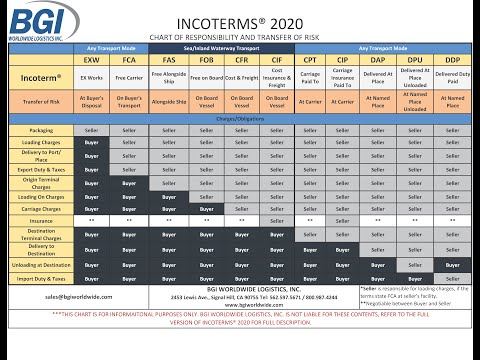
Incoterms, or International Commercial Terms, are rules the International Chamber of Commerce (ICC) created to facilitate international trade.

They define the responsibilities of buyers and sellers for the delivery of goods under sales contracts.

By providing a common language for trade terms, Incoterms standardize shipping terms and significantly reduce the risks involved in cross-border transactions, such as disputes, delays, and misunderstandings. Thus, you can have more confidence in your international trade.

History and Development


First published in 1936, Incoterms have been periodically updated to reflect changes in international trade practices.

The latest version, Incoterms 2020, provides clear guidance on the responsibilities of trading partners.

These updates ensure that the terms remain relevant to current global trade conditions.

2 Categories of Incoterms


Overview of Incoterms Categories

Incoterms are divided into two main categories:

1 – Rules for any mode of transport: These apply to any type of transportation, including air, rail, road, and sea.

2 – Rules for sea and inland waterway transport: These apply specifically to shipments that travel only by sea or inland waterways.

Rules for any mode of transport


EXW (Ex Works): The seller makes the goods available at their premises. The buyer bears all the costs and risks of transport.

FCA (Free Carrier): The seller delivers the goods to a carrier or another specified person at the seller’s premises or another named place. From then on, the buyer assumes responsibility for transportation and associated costs.

CPT (Carriage Paid To): The seller pays for carriage to the named place of destination, but the risk transfers to the buyer upon delivery to the carrier.

CIP (Carriage and Insurance Paid To): The seller pays for carriage and insurance to the named place of destination.

– DAP (Delivered at Place): The seller delivers the goods ready to be unloaded at the named place of destination.

– DPU (Delivered at Place Unloaded): The seller delivers and unloads the goods at the named place of destination.

– DDP (Delivered Duty Paid): The seller bears all costs and risks, including duties, delivering the goods to the named place of destination.


Rules for sea and inland waterway transport


FAS (Free Alongside Ship): The seller delivers the goods alongside the ship at the named port of shipment. The buyer bears the costs and risks from that point onward.

FOB (Free On Board): The seller delivers the goods on board the vessel. Once the goods are on board, the buyer assumes the risk.

CFR (Cost and Freight): The seller pays for the cost and freight to bring the goods to the destination port. Once the goods are on board, the risk is transferred to the buyer.

CIF (Cost, Insurance, and Freight): The seller pays for the cost, insurance, and freight to the named destination port. Once the goods are on board, the risk is transferred to the buyer.


How to Choose the Right Incoterms for Your Shipment


Assessing Your Shipping Needs

– Nature of Goods: Consider the type and value of goods.

– Transportation Mode: Determine the best mode of transport.

– Destination: Consider the import regulations of the destination country.

Evaluating Costs and Risks

– Cost Evaluation: Compare costs associated with different Incoterms.

– Risk Assessment: Understand the risk distribution between buyer and seller.

Practical Examples

Evaluating Costs and Risks

– Scenario 1: A small business importing electronics might choose FCA to have more control over the main carriage.

– Scenario 2: A large manufacturer exporting heavy machinery might use CIF to handle shipping insurance and freight.


Key Responsibilities in Incoterms


Seller’s Responsibilities

– Delivery of goods and documents

– Export clearance

– Pre-carriage and main carriage, depending on the Incoterm

Buyer’s Responsibilities

– Import clearance

– Payment of import duties and taxes

– Delivery from the point of import to the destination


Common Mistakes and How to Avoid Them


Misunderstanding Terms

– Ensure a clear understanding of each Incoterm

– Use reliable sources like the ICC’s official guide

Incorrect Documentation

– Maintain accurate records of all transactions

– Double-check documents to ensure they meet all legal requirements

Failure to Communicate

– Establish clear communication channels between buyers and sellers

– Confirm all terms and responsibilities before finalizing contracts

The Future of Incoterms


Recent Updates

Incoterms 2020: Introduced changes to better reflect modern trade practices.

– Key Changes: DPU replaces DAT, which provides more flexibility for buyers and sellers using their means of transport under FCA.

Emerging Trends

– Technology: Digitalization is streamlining documentation and compliance processes.

– Globalization: Increased global trade may lead to further updates to Incoterms.


Conclusion


Understanding and correctly using Incoterms is essential for smooth international shipments.

By assessing your shipping needs, evaluating costs and risks, and avoiding common mistakes, you can choose the right Incoterms for your business.

Additional Resources

International Chamber of Commerce

Incoterms 2020 Guide

Choosing the right Incoterms can significantly impact your international trade operations. Use this guide to make informed decisions and enhance your global shipping strategy.


BGI Worldwide Logistics offers premium freight forwarding services to make importing goods into the U.S. effortless and efficient. Our comprehensive range of services caters to all shipping needs.

With cost-effective, hassle-free solutions, we guarantee a professional and reliable shipping experience.

Choose BGI for all your freight needs and experience the difference with unmatched logistics expertise and customer care.

Get A Quote