Streamline your global trade strategy with practical solutions and expert insights.
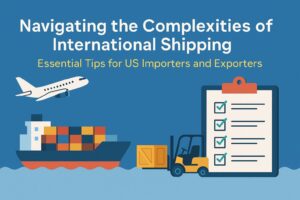
Flat-style illustration of global shipping logistics including a plane, cargo ship, forklift, and checklist clipboard, with the text “Navigating the Complexities of International Shipping – Essential Tips for US Importers and Exporters.”

Introduction

International shipping is critical to global commerce, especially for U.S. companies importing or exporting goods.

But with countless regulations, shifting freight rates, and unpredictable customs processes, it can feel overwhelming.

If you are a business trying to thrive in international trade, understanding how to navigate these complexities is essential.

This blog will discuss common roadblocks and share simple, expert-backed ways to speed up, reduce costs, and eliminate stress in your supply chain.

1. The Basics of International Shipping


1.1 What Is International Shipping?

International shipping is the movement of goods across national borders.

It involves a coordinated effort between manufacturers, freight forwarders, carriers, and customs authorities.

Components like documentation, transport mode selection, packaging, and compliance all play a vital role in ensuring smooth delivery.

Components like documentation, transport mode selection, packaging, and compliance all play a vital role in ensuring smooth delivery.

1.2 Modes of Transport

ModeBest ForProsCons
Ocean FreightBulk, non-urgent cargo Cost-effective, handles high volume Slow transit, potential delays
Air Freight High-value, time-sensitive goods Fast, reliable, secure Expensive, limited capacity
Rail & Truck Regional or cross-border shipments Flexible and widely accessible Slower for long-haul destinations

2. Common Challenges for U.S. Importers and Exporters


2.1 Documentation Errors

Incomplete or incorrect documentation is among the most common causes of shipping delays. Critical documents like commercial invoices, certificates of origin, and packing lists must be accurate.

Tips:

  • Double-check all required customs documents

  • Automate form creation using logistics software

2.2 Customs Delays

Each country has its own import/export regulations. Incorrect tariff codes or a missing declaration can lead to customs holds.

  • Work with a licensed customs broker

  • Stay up to date on international trade policies and duty changes

2.3 Freight Rate Volatility

Rates fluctuate due to global demand, fuel prices, or port congestion.

Tips:

  • Lock in long-term contracts with carriers

  • Diversify transportation modes to mitigate risk

3. Key Documents Every Business Should Understand

Rates fluctuate due to global demand, fuel prices, or port congestion.

DocumentPurposePrepared By
Commercial InvoiceDeclares product value for customsExporter
Bill of Lading (BOL) Serves as the contract of carriageCarrier/Freight Forwarder
Packing ListDetails the contents of each shipmentExporter
Certificate of OriginCertifies where goods are manufactured Exporter/Government
Import/Export LicensesLegal clearance for international tradeImporter/Exporter

4. Tips for Streamlining International Shipments


4.1 Work With a Trusted Freight Forwarder

A freight forwarder like BGI Worldwide Logistics can manage the entire shipping process – from documentation to customs clearance – helping you avoid delays and reduce overhead.

4.2 Choose the Right Incoterms

Incoterms define responsibilities between buyers and sellers. Choosing the right one can significantly impact shipping efficiency and cost.

IncotermBuyer ResponsibilitySeller ResponsibilityIdeal Use 
FOBFreight, insuranceDelivery to the portOcean freight deals 
EXWAll shipping stagesGoods availabilityExperienced importers 
DDPNoneDoor-to-door deliveryFirst-time or small exporters 

4.2 Choose the Right Incoterms

Real-time shipment tracking, automated invoicing, and inventory tools can prevent delays and improve supply chain visibility.

Benefits:

5. Cost-Saving Strategies for US Importers and Exporters


  • Consolidate Shipments: Reduce per-unit freight costs by bundling goods.

  • Use Space-Efficient Packaging: Minimize dimensional weight for air or LCL cargo.

  • Leverage Free Trade Agreements: Reduce or eliminate duties with eligible countries.

  • Negotiate Carrier Rates: Build long-term relationships to gain pricing flexibility.

6. Real-World Success Stories


Case Study 1: Reducing Shipping Costs with Consolidation

A U.S. importer of home goods was sending weekly LCL shipments from Asia, incurring high freight and handling costs. By switching to monthly consolidated shipments through BGI Worldwide, they reduced costs by 25% and improved customs clearance efficiency.

Case Study 2: Avoiding Customs Delays

A mid-sized exporter shipping electronics to Latin America repeatedly faced customs holds. BGI helped by pre-clearing documentation, reviewing HS codes, and providing bilingual support, cutting average clearance time by 3–5 business days.

Benefits:

  • Predictive alerts for delays
  • Optimized inventory management
  • Digital document storage and access

7. Compliance Tips for a Hassle-Free Supply Chain


  • Register for an Importer of Record (IOR) number

  • Review U.S. CBP regulations regularly

  • Ensure product labels and markings meet local standards

  • Perform pre-shipment compliance checks

8. Conclusion

Navigating international shipping doesn’t have to be overwhelming. With the right strategies, tools, and partners, you can move products across borders efficiently and cost-effectively.

Ready to streamline your import or export process?

Contact BGI for expert guidance and a customized shipping strategy that fits your business needs.

Call: 800-987-4244

Click below to get a quote


Get A Quote


Explore our blog for more shipping tips and insights.

9. FAQs


Q: What’s the fastest method for international shipping?

A: Air freight is typically the fastest, ideal for high-value or time-sensitive shipments.

Q: What’s the difference between FCL and LCL?

A: FCL (Full Container Load) means you use an entire container; LCL (Less than Container Load) means your cargo shares space with other shipments.

Q: Should I manage international shipping myself?

A: Most small to mid-sized businesses benefit from working with a freight forwarder to avoid costly errors and delays.

Q: How can I avoid customs delays?

A: Use a licensed customs broker, prepare accurate documents, and stay updated on country-specific regulations.

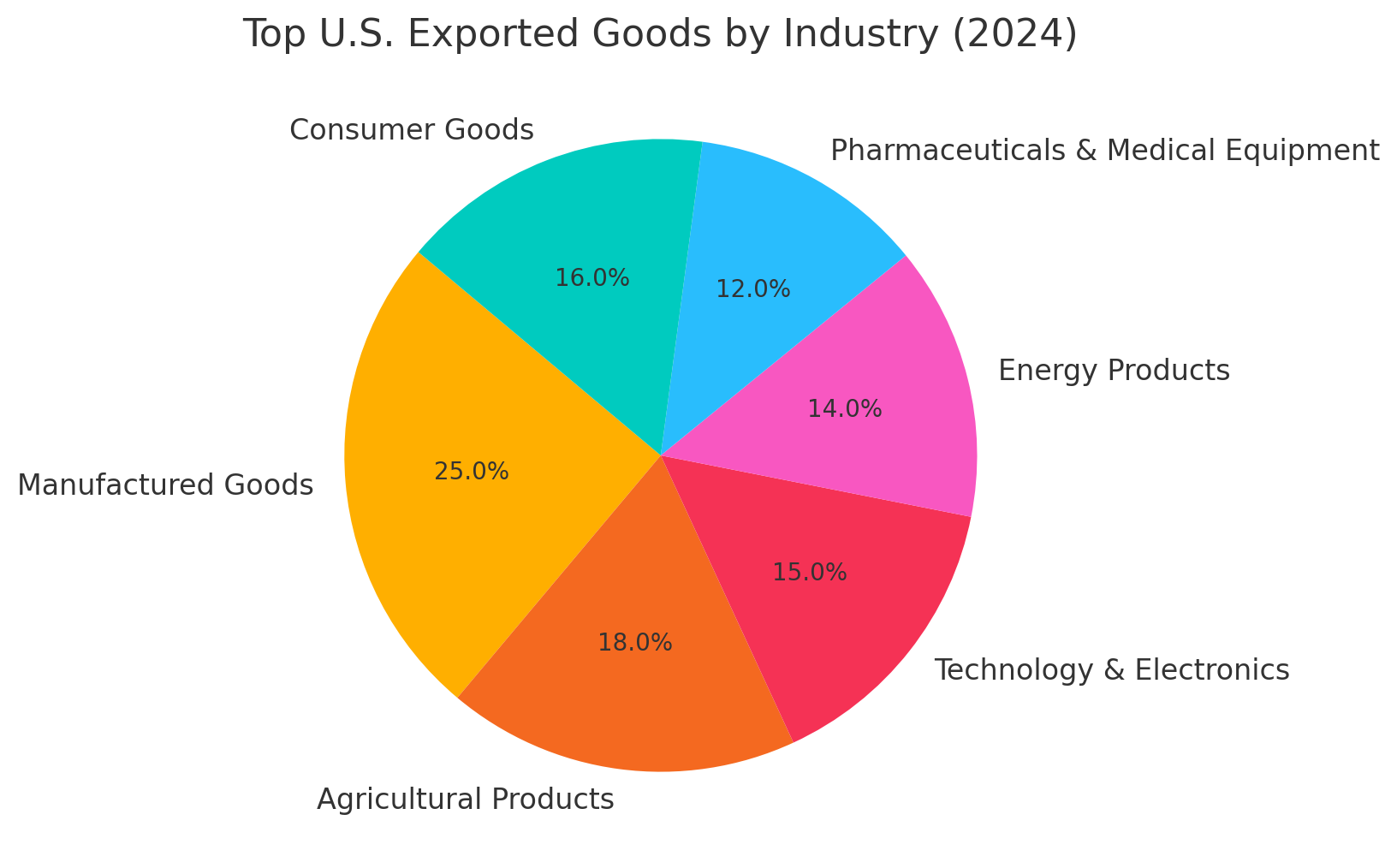
Image with three cargo jets flying above a cityscape and harbor with a shipping container on a cargo truck with text "How to export goods overseas".

Staying competitive in the global Export marketplace


Introduction:

Expanding your business by exporting goods overseas can open new revenue streams and increase market reach.

The U.S. is one of the world’s largest exporters, supplying products to countries across the globe.

However, understanding what goods are in demand, where they are most commonly shipped, and how to navigate the complexities of international trade is crucial for success.

This guide will walk you through the most commonly exported goods from the U.S., their top destinations, and the key challenges businesses face when shipping internationally.

We’ll also provide strategies to overcome these challenges, ensuring your business remains competitive in the global marketplace.


1. What Goods Does the U.S. Commonly Export?


The United States exports a wide range of goods, spanning multiple industries. Below is an overview of the top export categories:

Manufactured Goods

  • Automobiles and auto parts
  • Industrial machinery
  • Electrical equipment and components

Agricultural Products

  • Soybeans, corn, and wheat
  • Dairy products and meat
  • Fresh fruits and vegetables


Technology & Electronics

  • Semiconductors and computer components
  • Medical devices and healthcare technology
  • Telecommunications equipment

Energy Products

  • Crude oil and refined petroleum
  • Liquefied Natural Gas (LNG)
  • Coal


Pharmaceuticals & Medical Equipment

  • Vaccines and prescription drugs
  • Diagnostic tools and laboratory equipment

Consumer Goods

  • Apparel and footwear
  • Beauty and personal care products
  • Packaged food and beverages


A pie chart representing the top U.S. exported goods by industry in 2024.

Source: U.S. International Trade in Goods and Services


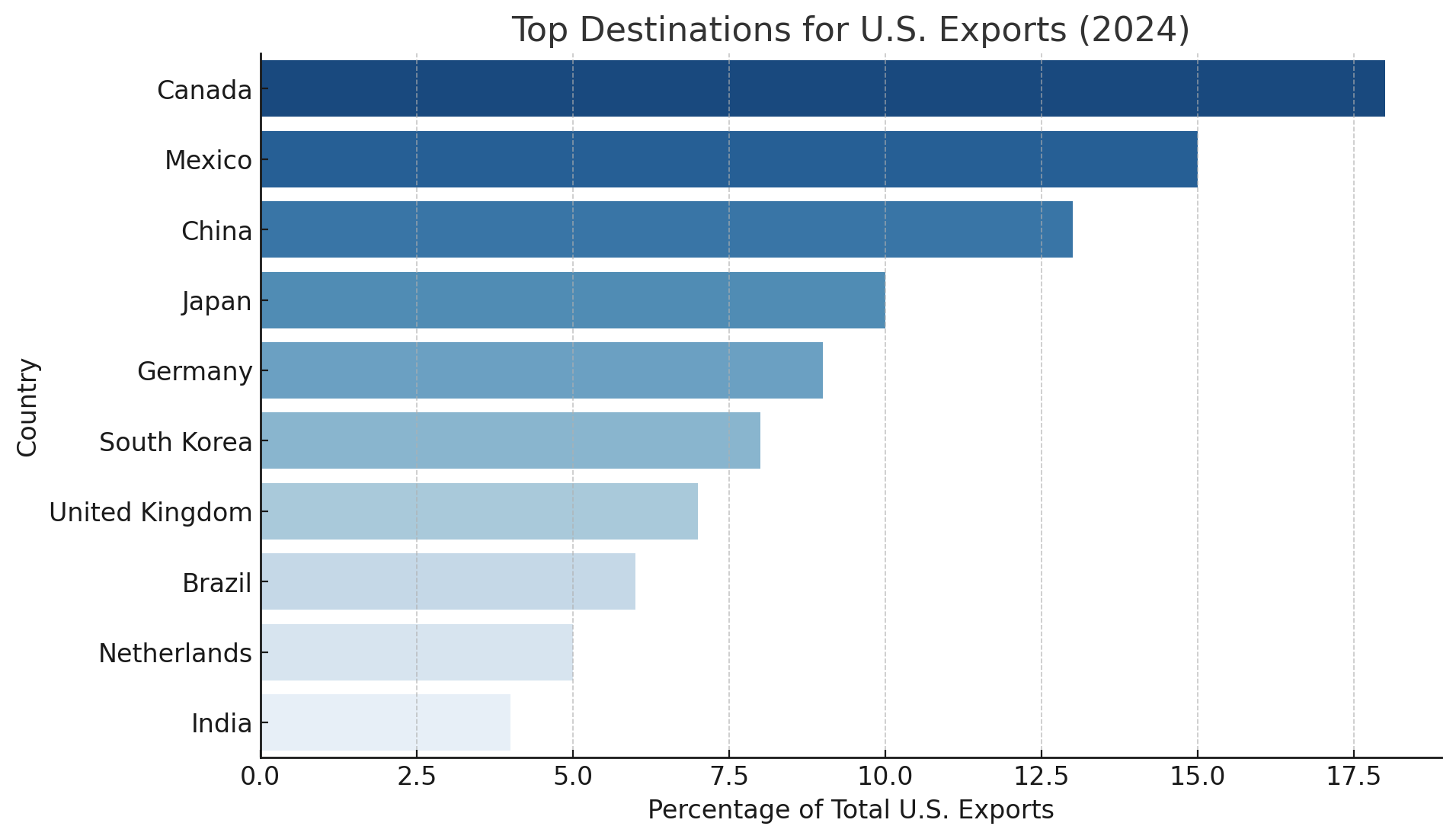
2. Top Destinations for U.S. Exports


The U.S. exports goods to almost every country, but specific markets consistently rank as top destinations:

Country/Region Major U.S. Exports
CanadaAutomobiles, machinery, energy products
MexicoIndustrial equipment, agricultural products, electronics
ChinaSoybeans, semiconductors, and medical devices
JapanPharmaceuticals, aircraft parts, food products
GermanyChemicals, auto parts, aerospace components
South KoreaMedical equipment, energy products, technology
United Kingdom Pharmaceuticals, consumer goods, software


A bar chart showing the top destinations for U.S. exports in 2024.

Source: U.S. Goods Trade with Global Partners

3. Common Challenges in Exporting Goods Overseas


While exporting can be highly profitable, businesses must navigate several challenges:

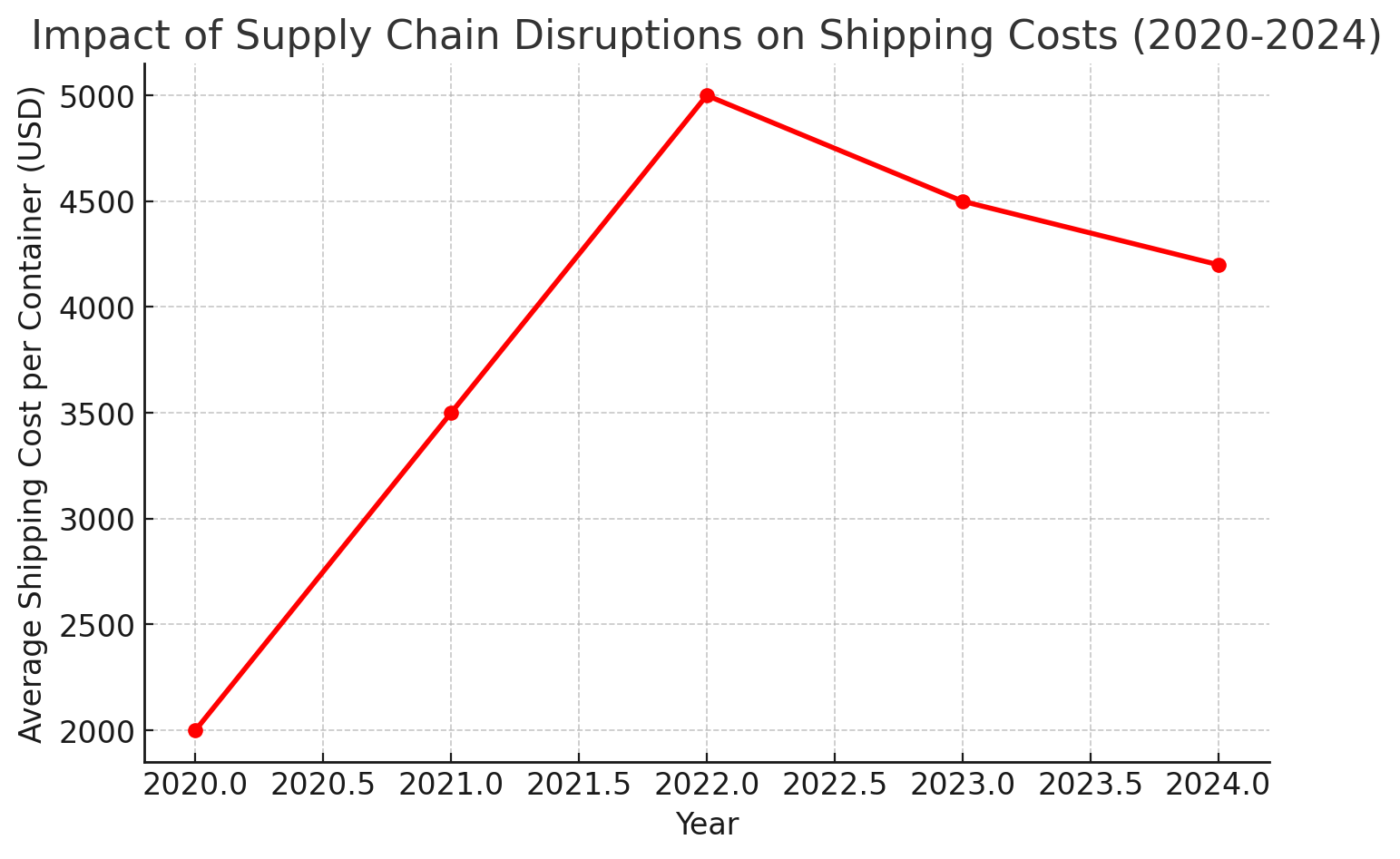
A. Supply Chain Disruptions

  • Port congestion causes long wait times for shipments.
  • Freight rate volatility is leading to increased costs.
  • Container shortages are resulting in shipment delays.
  • Geopolitical issues affecting trade relationships.

A line graph illustrating the impact of supply chain disruptions on shipping costs from 2020 to 2024.

Source: Impact Of Supply Chain Disruptions On Shipping Costs (2020-2024)

B. Compliance & Regulatory Hurdles

Navigating export regulations can be complex. Some key considerations include:

  • Export licenses and documentation: Ensure compliance with U.S. Bureau of Industry and Security (BIS) regulations.
  • Customs clearance: Incorrect paperwork can lead to shipment delays.
  • Sanctions and trade restrictions: The U.S. restricts exports to certain countries (e.g., Iran, North Korea).

C. Currency Fluctuations & Payment Risks

  • Exchange rate volatility can impact profit margins.
  • International payment risks, including delays in receiving funds.
  • Using secure payment methods like letters of credit can mitigate financial risks.

D. Logistics & Freight Forwarding Issues

  • Choosing the right Incoterms (e.g., FOB, CIF, DDP) is crucial for risk management.
  • Air vs. ocean freight: Businesses must weigh the cost vs. speed.
  • Last-mile delivery challenges can arise in international markets.


4. Strategies to Overcome Exporting Challenges


To successfully export goods overseas, businesses should implement the following strategies:

A. Optimizing the Supply Chain

  • Diversify suppliers to minimize disruptions.
  • Schedule shipments ahead of time to prepare for potential delays.
  • Utilize freight tracking technologies for real-time visibility.

B. Compliance & Regulatory Hurdles

  • Work with a licensed customs broker to navigate compliance requirements.
  • Stay updated with changes in export control laws.
  • Use an Export Management System (EMS) to keep documentation organized.

C. Managing International Transactions

  • Implement hedging strategies to protect against currency fluctuations.
  • Use trade credit insurance to safeguard against non-payment risks.
  • Partner with reputable international banks for secure transactions.

D. Choosing the Right Freight Forwarding Partner

  • Look for a freight-forwarding company with experience in your industry.
  • Consider a third-party logistics (3PL) provider for global supply chain solutions.
  • Evaluate their network coverage, reliability, and customer service.


5. Conclusion & Key Takeaways


Exporting goods overseas presents significant opportunities for U.S. businesses, but success requires careful planning.

Understanding which products are in demand, where to ship them, and how to navigate global challenges allows companies to expand their reach and increase profitability.

Key Takeaways:

✅ The U.S. exports manufactured goods, agricultural products, technology, and pharmaceuticals worldwide.
Canada, Mexico, China, and Europe are the top destinations for U.S. exports.
Supply chain disruptions, regulatory challenges, and currency risks can impact export operations.
Planning shipments, ensuring compliance, and working with reliable freight forwarders are key to success.


BGI Worldwide Logistics offers premium freight-forwarding services to make exporting goods from the U.S. effortless and efficient.

Our comprehensive range of services caters to all shipping needs.

With cost-effective, hassle-free solutions, we guarantee a professional and reliable shipping experience.

Choose BGI for all your freight needs and experience the difference with unmatched logistics expertise and customer care.

Call: 800-987-4244

Click below to get a quote

Get A Quote

Explore our blog for more shipping tips and insights.